By: Molière
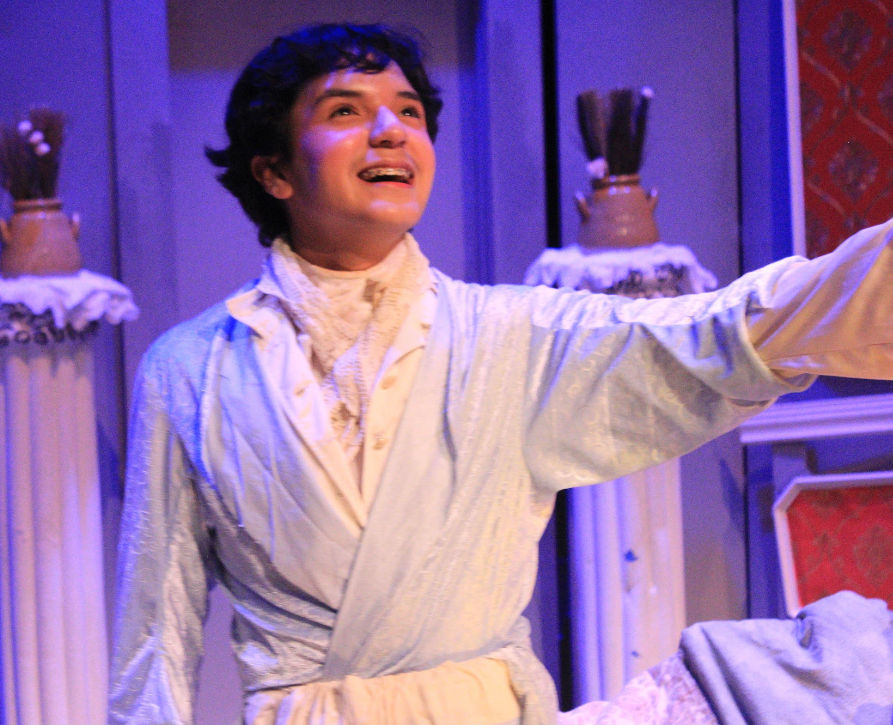
Imaginary Invalid was Molière's final play, first performed in February 1673 in Paris. A satire of the medical profession and a comedy-ballet, or a comedy combined with song and dance, the play contained a good deal of farce and was written to amuse King Louis XIV. It is also a great character study of a hypochondriac or a patient obsessed with being ill, and it contains a brilliant social and political commentary on Paris in the 1670s. Many critics have even found a subtle but powerful philosophical strain in work, and it is an excellent example of the stylized comedy-ballet popular in Louis XIV's courtly theater. Molière played the leading role of the hypochondriac Argan and famously coughed up blood during his fourth performance, dying later that evening in what became known as a bitter irony, given the play's subject of imaginary illness.
Choosing this play was challenging since our class was between a tragedy and a comedy. Since our company was especially great at tragedies, we wanted to challenge ourselves by completing a famously renowned French comedy. During our read-through, I saw the show as my chance to win a central role or a supporting one to boost my acting career and experiment with what I can do. During auditions, I like to open with a funny opening, a role that is utterly absurd for me to play to show that I am not afraid of acting and to shake the nerves I might have that day. I opened with the role of Thomas, an utterly air-headed character that wants to win the heart of anything that moves. The directors loved my choices for the character and decided that I would fit in that role. I was extremely excited when I saw my name on the cast list, as it was my first time acting in UIL theater.
The hardest part of the role was committing to the absurdity of the show since we had such ridiculous physicality imitating the Commedia del Arte characters. Even so, I wasn't the only one in our company struggling with this issue; I had people to grow alongside and didn't feel like I was failing. I did, however, figure out the comedy in my character and used it to wield a great power that was the audience. With the help of the audience, I managed to help boost the energy of our ensemble and helped the show become the comedy it was meant to be. In costumes, I had the issue of thoroughly understanding the show's time period. I managed to find a reference that worked with the audience and the directors. I couldn't wholly base it on the time period since the audience would not understand that she was a maid. So, I had to merge two ideas and create a complex and unique design that worked for the show.
The easiest part of the show was working on understanding the play since I had previously taken French classes and had some previous knowledge that I could bring to the table. I got to teach a seminar on French accents so we could all say our complex French names. I pulled some helpful exercises from youtube and created a PowerPoint to help teach the basics. The goal was to get everyone to speak in an accent, but later we found it easier to adapt it to our modern-day accents. I at least helped pronounce some French words and our character names.
I learned from the process that I can't wait for other people to help me. I have to learn how to help myself and watch out for what other people need help in. I also learned so many things in costuming; for example, this show was the show where I used the sewing machine the most. I sacrificed some lunches so that our company's costumes would all be handmade, and so I could better my costume in detail. My costume was created to the design, but I realized halfway through that it needed detail to look realistic and worn in. Not only that, but I also had to work around the challenge of a costume change. My first sketches were meant to be very simple in that she would only need to take off her skirt to change. But, with my director's changes, her costume change became more complex as time passed. I have learned through trial and error what is the best way to do a costume change, and hopefully, for the next year, I can take my experiences and change theater magic for our company.